Saturday, November 30, 2013

Caterpillars - Gone


The cold weather last week has nipped all of the milkweed.  Their light brown stalks standing bare in the garden.  Tough times for the caterpillars, as a week ago there were many on these plants. But they "have their ways" as Saturday, when it warmed a bit, a monarch fluttered by as well as a Little Sulfur.   The poppy seeds planted last month have poked through like spots of a bright green carpet.

In the vegetable garden, the cauliflower, Brussels sprouts, parsley, thyme, dill and sage are doing well.  The green beans, full of blooms, took a bit of a hit!


Thursday, November 28, 2013

Thanksgiving

A crisp cool day to be thankful for our loved ones, good friends, and so many other blessings. 

Wednesday, November 6, 2013

Mosaiculture - Garden "WOW"

Once every three years, there is an international competition in horticultural sculpture, called "mosaiculture" in a major city in the world. This year it is Montreal.  This is not topiary but rather creating sculptures out of living plants.  The greatest horticulturalists in the world, from 20 different countries, submitted plans a year in advance. 

Steel armatures were then created to support the works (some 40 feet high); they were then wrapped in steel mesh and filled with dirt and moss and watering hoses.  Then they ordered 3 million plants of different shades of green and brown and tan, and these were grown in greenhouses all over Quebec. 


In late May, these horticulturalists came to Montreal and planted all of their plants in the forms at the Montreal Botanic Gardens, and they have  been standing for three months now.  There were 50 major sculptures along a path two miles long.  They were incredible. 


These are three of more than 30 displays.   If you would like to visit a few and walk along the path with me, click on THIS LINK

Sunday, November 3, 2013

Preparing for Cool

As the outdoor gardening season winds down, it’s time to gather those plants you need to winter over and bring them back indoors, to a garage or greenhouse for the winter.   

Your Helper #1 spent the better part of this great Sunday afternoon moving our outdoor potted “trees” and big plants into the greenhouse.  


And, as you can see, our Master
Gardener has already prepared her cuttings for propagation to use next spring.


For the smaller plants she often trims up the plant once it is moved into its winter space. However:
1.  Several weeks before bringing them in, spray them with an insecticide such as Neem Oil *  and separate from other plants. (if you are not familiar with it, Neem Oil is worth understanding and is very useful)
2.     Three to four days before bringing in, spray again to kill off 
       any insects that may have just arrived.
3.   Check if the plants need repotting. If so, invert the pot, tap
      the rim against a hard surface, and turn the plant out. You can
      also squeeze a plastic pot to loosen up the root ball. 

If roots are growing through the drainage hole and wrapped around the root ball, or bulging up at the rim it’s time to repot. This will allow for greater height and increased width growth. If you choose not to move them into a larger container (one size larger pot), gently comb out any tangled roots, trim roots, and refresh the soil. (Restricting the pot size will have a dwarfing effect on the plant.)

Often plants have a growth spurt after being moved back inside to a 
warmer climate. Do not add fertilizer to encourage this growth. Let the 
plant acclimate to the lower light and humidity levels. Growth will become slower, allowing the plant to rest for the winter. Start fertilizing again in the spring.  Only water plants sparingly through the winter months.


*     Neem Oil is derived by pressing the seed kernels of the neem tree. It is very bitter with a garlic/sulfur smell. A single seed may contain up to 50 percent oil 
by weight. Neem oil has been used for hundreds of years in controlling plant pests and diseases. Many researches have shown that the spray solution of 
neem oil helps to control common pests like white flies, aphids, scales, mealy bugs, spider mites, locusts, thrips, and Japanese beetles, etc. Neem oil also works as a fungicide and helps control powdery mildew. Some people have also experienced good results with neem oil spray on black spot. 
      Orchid owners use pure neem oil spray to control pests like mealybugs, spider mites, etc. One of the main ingredients in neem seed oil is Azadirachtin that works as an insect growth regulator, thus preventing the larval stage to molt into an adult. As neem is very bitter in taste, it also works as an antifeedant thus making the leaves sprayed with it very distasteful for the bugs to eat, and the bugs choose to starve themselves than eat the leaves treated with neem. 
     Neem oil is bio-degradable and has proven to be non-toxic to mammals, birds, bees or earthworms. It  breaks down easily and quickly. Neem has also proven to be not harmful to adult beneficial insects, since it primarily affects only plant sap-sucking insects, which feed upon the treated plants. However it is recommended that care should be taken not to spray neem oil solution when honey bees and the larvae of beneficials like ladybugs, etc. are present. Neem oil spray like any other oil spray can also burn leaves if sprayed in sun. 


Thursday, October 24, 2013

Sustainable Land Development

Our Master Gardner is Education Chairman and on the Board for The Mercer Society and again has been involved in the production of the following event.    This is the second year Mercer Arboretum has put on a professional conference on sustainable development.  Part of this year’s conference will be a trip to Mandolin Gardens .  Stop by and visit this remarkable example of a Sustainable landscape project.

Mercer Arboretum & Botanic Gardens is hosting the 2nd annual Sustainable Landscape Conference Friday, October 25, from 8 a.m. to 2:15 p.m. at Big Stone Lodge at Dennis Johnston Park, 907 Riley Fuzzel Road, Spring.   (I am kind of late on this but you could still sign up)

Presentations include:
  • "SITES Rating System: Encouraging and Rewarding Leadership in Site Sustainability" by Jonathan Garner, SITES Coordinator, Lady Bird Johnson Wildflower Center;
  • "Lower Resources, Higher Performance: Native Grasses for Turf, Roadsides, Green Roofs, Golf Courses and Parks for the Urban Landscape" by Mark Simmons Ph.D., Lady Bird Johnson Wildflower Center;
  • "Shangri La Botanical Gardens and Nature Center: A Commitment to Environmentally Responsible Practices" by Rick Lewandowski, Director, Shangri La;
  • "Turning Scarce Resources into a Bountiful Harvest (Financial & Natural)" by Commissioner R. Jack Cagle, Harris County Precinct 4;
  • "Mandolin Gardens - Converting a Traditional Detention Basin into an Award-Winning Park Amenity" by Merrie Talley, RLA, ASLA, LEED.

The day of the conference will include remarks from Mercer Arboretum & Botanic Gardens Director, Darrin Duling, Lunch, and will conclude with a site visit to Mandolin Gardens Park.

Professional Conference Fee (including CEU credits) is $135 for Mercer Society members and $150 for non-members. General Conference Fee (without CEU credits) is $112 for Mercer Society Members and $125 for non-members.

To register or for additional information, contact The Mercer Society at 281-443-8731, or you can email them msociety@hcp4.net. 


Monday, October 21, 2013

One for your Bonnet ?

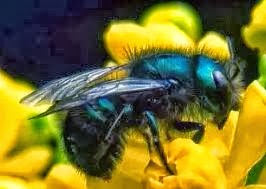
Bees.   Yes, we all know that bees are important to our gardens and many other crops. But who knew?  Bees that don't sting?  Bees that don't live in a hive?  Bees that look more like flies? Bees that produce neither honey nor beeswax ???  Well, Mason Bees can be described by all of these qualities.

Our Master Gardner has become rather interested in Mason Bees.  These little guys are great pollinators and live in small tubes or tunnels that other insects have hollowed out of dead trees. Well, that is when woodpeckers and squirrels don't get them. 

There are some very decorative "boxes" one can build or buy for these bees to live in.  Place it on the south side of a tree or house as they need the warmth from the sun to be able to fly.


Google "Mason Bees" for some interesting reading and surprise your friends with some "Entomological Wisdom." 

Here is some information on a documentary about bees that is soon to be available at the Houston Museum of Fine Arts.
It is 91 minutes with show times on Wed, Oct 23 at 6:30 pm and Sun Oct 27 at 5 pm.  See THIS LINK for details.. I believe there is a discussion period following the talk.

And if you are a fan of TED Talks... HERE IS a link that is in keeping with the theme of this post. As of today it has had over 414 thousand views since it was posted last month.

"Bee Good and Bee Well"


Thursday, October 3, 2013

Texas Eye Candy

Kerrville and Fredericksburg Area

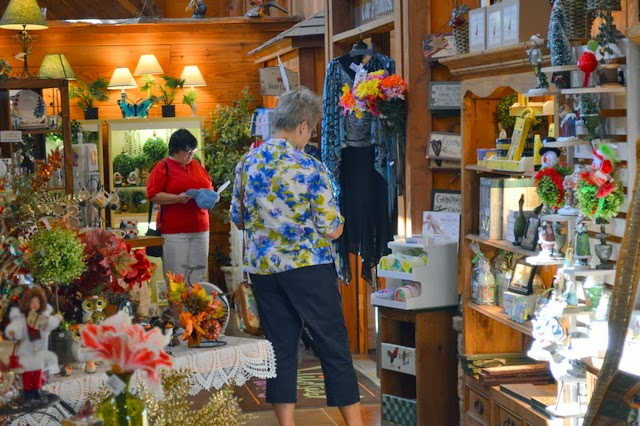
Here are a few pictures from this week of shopping, sightseeing, and plant viewing.  These two hill country communities have a lot of interesting things to see.  Kerrville and Fredericksburg Texas.

These are from Gardens of the Ridge, Kerrville


And this from "The Pinnacle" of Comanche Trace  


And at Wildseed Farms near Fredericksburg